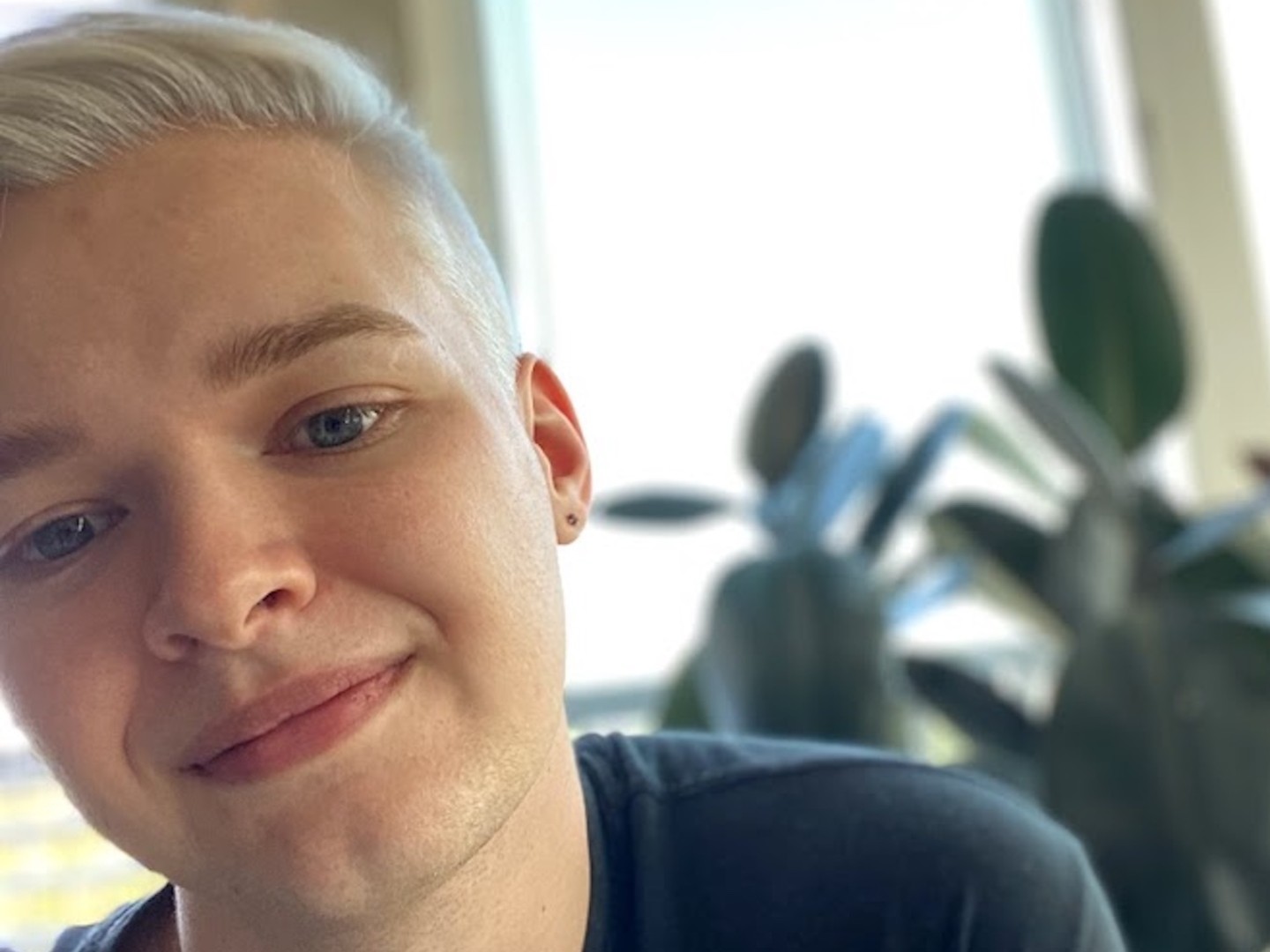
Micah Ferden ’18
Major: Nursing
Minor: Religion
Full-Time Graduate Student, Doctor of Nursing Practice – Family Nurse Practitioner Track, University of Washington
Per Diem Clinical Nurse, Fred Hutch Cancer Center – Proton Center, Seattle
What did Concordia mean to you as a student?
Concordia was a place where I was not just a number but a part of a community. It was fun walking around on campus and running into other students, faculty, and staff who knew me by name and would genuinely want to chat about how I was doing and get to know me past surface level. Wherever I went, most times, I could run into someone I knew, so I never had to worry about not knowing anyone!
What does Concordia mean to you now?
Concordia is a place where I was able to develop into my true self and personality. I was allowed to explore so many interests throughout my time at Concordia, related to my major and outside of it, that I feel I came out a well-rounded person. This exploration, both on campus and on study abroad trips, gave me a wider sense of the world around me, and now I always go into things with an open mind and curiosity to know more. If it weren’t for my experiences at Concordia, I don’t think I ever would’ve come out of my shell and become the person I am today.
What is a life lesson you learned in college? What is a life lesson you have learned since graduating?
I learned not to be afraid to try something new. You don’t want to go about life always wondering why you didn’t try something. Since graduating, I’ve learned never to be afraid to ask questions. We are always learning new things, no matter how much experience we get in our careers or life passions, so we should always be curious and ask questions to broaden our knowledge and foster further curiosity.
Did you have a defining moment (or moments) at Concordia that helped shape you as a person?
I think the defining moment in my time at Concordia was working in Residence Life. I was a shy, introverted person during my first year at Concordia. I grew and explored a bit during the first year, but not a lot, as everything was still new. I applied for Residence Life and became an RA for my sophomore year. I was nervous, but it was the best thing for me, and I continued as an RA and DA in my junior and senior years. It pushed me out of my shell and allowed me to grow as a leader, make lifelong friends, and learn skills that I take into my personal and professional career. It’s not for everyone, and it is not an easy job to have, but I would not be who I am today without that experience.
Did you have a mentor at Concordia who was influential during your time at college (and/or beyond)?
My mentors were the nursing department as a whole and Roxane Case. The nursing department looks out for your well-being, and I felt comfortable talking to each of my professors, regardless of whether I had a class or clinical with them that semester. My advisor, Dr. Bokinskie, was the one who suggested I pursue oncology based on the interests I told her when I really had no idea what I wanted to do after school (which has been my area of practice for the last seven years). Dr. Indergaard, even though she wasn’t my advisor, spent a lot of time talking through post-college plans and even helped me one on one when I struggled to grasp concepts in her course. The nursing department office manager at the time, Kristi Jarolimek, is a lovely person. She always greeted everyone with a smile, and I felt comfortable talking to her, regardless of whether it was about school, work, or general life. In my postgraduate career, I got to work with Dr. Rydell as a colleague, and it was fun getting to work with him on that level, as well as coming back to Concordia to talk to current/potential nursing students when I lived in the area.
My other mentor was Roxane Case, who is the Cultural Events coordinator. I was able to connect with her during my freshman year through a mutual connection with my great aunt, and I was able to work with Roxane throughout my time at Concordia. She was amazing to work for and was very accommodating with my Residence Life and nursing major schedules. I could always talk to her about anything going on, which was the one constant I had in an ever-changing four years. I admire her for all the work she does for the college and all the events she coordinates on campus, such as the Christmas concerts and the annual Faith, Reason, and World Affairs Symposium. She does it all, and I wish more people on campus recognized her hard work.
Do you remember a favorite assignment you tackled as a student? Why was it so enjoyable? Did you build skills while working on it that transfer to your current work?
My favorite assignment I tackled was helping organize the annual flu clinic as a part of the Community Health Class in the fall semester of my senior year. We were split into different groups to do various tasks associated with organizing it, recruiting volunteers in the junior class and faculty, and marketing it to the campus at large. I think it was enjoyable because we got to take the knowledge we had learned in the course so far and put it into practice. The skills in organizing and managing have transferred into every nursing role I’ve had, including my current one as a graduate student.
If you could say one thing to your past college self, what would you say?
I would tell my past self that it’s OK to not be OK. Not every day is going to be great, and not every day you are going to feel 100%. That is OK! Life is a roller coaster, and the more you go along with the ride and not stress about the little stuff, the better you are going to feel.
Concordia instilled this desire to treat the whole person, not just a patient.
How did your time at Concordia prepare you for your job now?
The nursing program at Concordia prepares you to be a generalist RN, meaning we know a little about many things, and creates a base for going out into the world as a nurse. Once outside of school, we specialize in whatever area of our choosing, and whenever we move to a new specialty, we restart that knowledge building. I went into oncology and have worked in a few areas within this specialty, such as general oncology, hematology-oncology, and now radiation oncology. In each of these roles, the thing that has consistently been passed along from my time at Concordia is that nursing is both an art and a science. I know that sounds cheesy, but it truly is. As oncology nurses, we are with people during one of the worst moments in their lives, and not only must we be knowledgeable about the diseases we are caring for and how they are treated, but we also get to know the person beyond the disease. Concordia instilled this desire to treat the whole person, not just a patient.
Can you talk more about your DNP-FNP degree?
Since graduating from Concordia, I knew at some point I wanted to pursue graduate school; I just didn’t know what I wanted to do for it yet. Spring 2022 is when I started seriously thinking of going back and, when I was looking into graduate programs for nursing, I thought through what I loved most about being a nurse and that has been patient care. In oncology, we see our patients pretty frequently, so you get to know them past their diagnosis, and that’s what I enjoy about what I do. In looking through my options, I found that the best fit for being able to continue that was to become a nurse practitioner, as I would be able to have a more significant impact on patient care than I do now. I specifically chose the family nurse practitioner track because I enjoy taking care of both adults and pediatrics, and this track of the degree would allow me to continue that in the outpatient setting. I then applied in Fall 2022 and found out I got in for a Fall 2023 start, and I haven’t looked back since!
The program is very good at establishing that this is our terminal degree, so there isn’t pressure to get perfect grades. Instead, they make sure we understand the content and are able to take it into our practice as nurse practitioners. Everyone in my cohort, both within the FNP track and the other tracks, has been lovely and helpful. We all help each other out and support each other to succeed, which reminds me of my nursing cohort at Concordia! I also completed a graduate certificate in palliative care during my first year, which has enhanced my practice both now and will in the future.
How do you use your religion minor in your professional life?
I find I use it in my professional sphere in that every patient has various religious or spiritual backgrounds that inform both their life and their healthcare, and my role as a nurse is to be open and curious to learn what they are and support them however I can in line with those beliefs and practices. Working in oncology, you meet patients during one of the worst times of their lives, and many patients draw on their religious or spiritual practices to help them cope during this time. I find my biggest strength has been to take the time to listen and hear my patients when they are struggling to cope and support them however I can. This support sometimes includes referring them to someone who can continue to explore these feelings deeper, such as the healthcare chaplain service or palliative care, or encouraging them to go to their trusted religious leaders for guidance. Taking this time to listen and hear about who they are past the diagnosis allows me to develop rapport with them and be able to advocate for them to ensure their care is following those beliefs and practices.
Do you have any favorite Concordia memories you’d like to share?
I would say one of my favorite memories from Concordia is all the meals I shared with various friends in Anderson Commons and The Maize during my four years. It was always a place we could gather to just catch up with the day, catch a quick bite between classes, or just hang out before heading out to either somewhere on campus or off campus. The Maize fries were my favorite, and I recommend that anyone who visits try some.
What advice would you have for future Cobbers?
Don’t be afraid to try something new or outside of your comfort zone. You never know when an opportunity may come again, and you don’t want to spend life regretting thinking about the thing you were too scared to try!
Published December 2025